 Why choose Breeze
 Marketing
 Creative
 Sales
Sales Remote work
 Managers
 Product teams
 Project management
 Task management
 Kanban tool
 Time tracking
 Project reporting
 Project calendars
 Project timeline
 Team workload
 Project automation
 Project customization
 Chat
Chat Web forms
 Project roadmap
 AI
AI What's new
 Articles & guides
 Help center
 Mobile apps
 Integrations
 Developers & API
 Free tools
What tools should your digital marketing agency use?

The tools your digital marketing agency needs come down to six jobs, not a list of famous logos: run the work, find and reach prospects, do SEO and content research, schedule and measure social, send email, and make things look good. Pick one solid tool per job and you have a real stack. The mistake almost every agency makes is buying by reputation instead of by the gap a tool actually fills, then paying for nine subscriptions where four would do. The right question is never "what is the best SEO tool," it is "which job is costing us the most time," and that answer differs for an agency of three versus one of thirty.
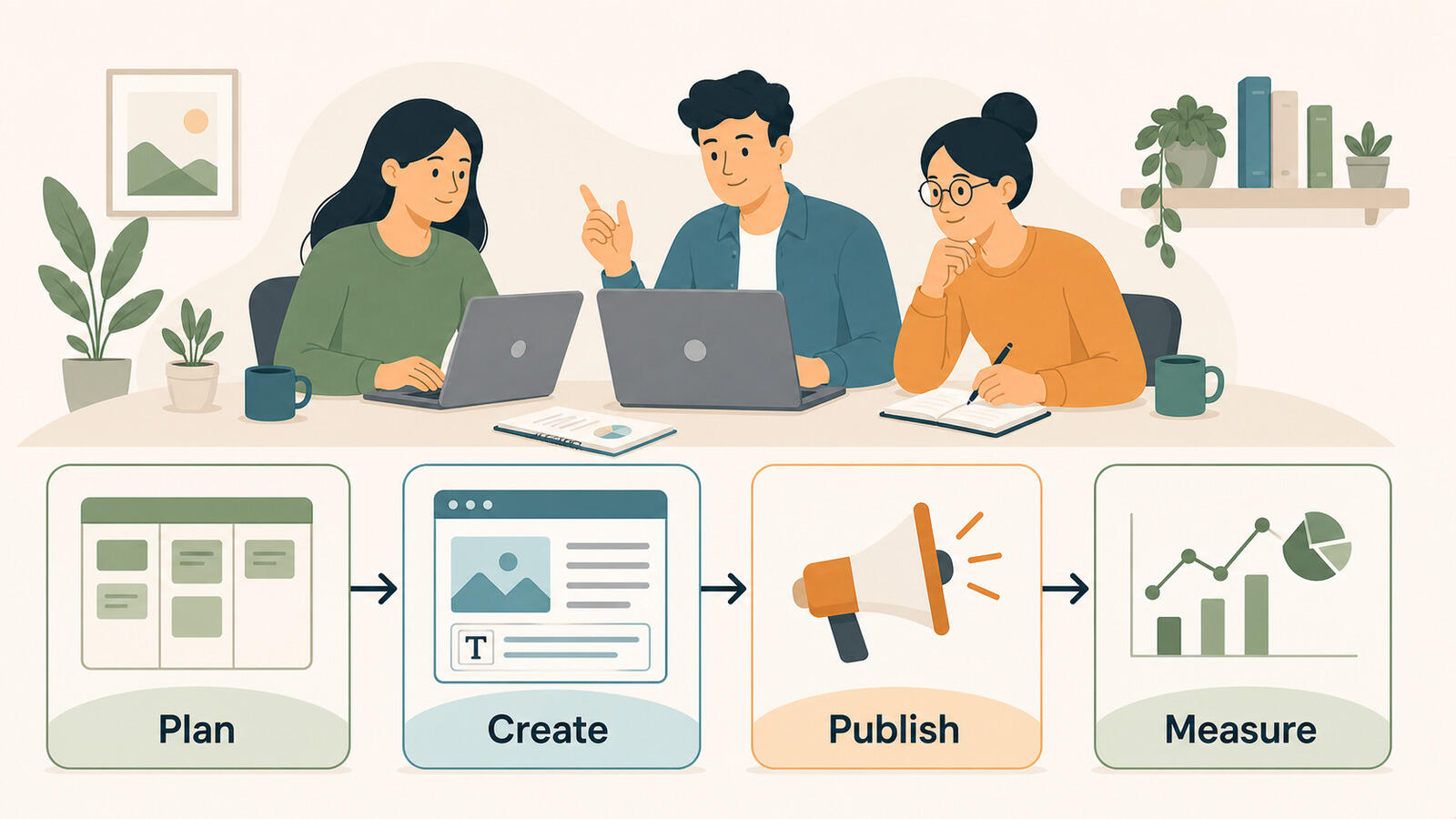
Which categories of tools an agency really needs
Strip away the brand names and an agency stack is just six jobs. Project and work management to coordinate clients, campaigns, and deadlines, which is the whole craft of managing marketing projects end to end. Outreach and prospecting to find contacts and pitch them. SEO and content research to know what to write and why. Social scheduling and analytics to keep a steady presence. Email marketing to nurture and convert. And design to ship visuals that do not look like a template everyone has seen.
That is the whole map. Everything sold to agencies slots into one of those six boxes, and most "must-have" lists are really one box dressed up as six. Write the categories down and ask which one you currently solve with a spreadsheet, a shared inbox, or someone's memory. That is the gap to fill first, because it is the one quietly costing you billable hours.
You also do not need a tool in every category on day one. A three-person agency doing mostly content might run fine on a work tool, an SEO tool, and a design tool, handling email and social inside platforms their clients already use. Coverage is not the goal. Closing the expensive gap is.
Why the work tool comes first
If you only get one category right, make it the work itself. The SEO platform, the email sender, the social scheduler, each solve a slice of a campaign, but none tell you who is doing which slice, by when, for which client. That coordination layer is where agencies bleed time, and it is the one job a fancier SEO subscription will never do for you.
Most agencies underrate this category because it feels like overhead, not output. It is the opposite. When a designer assumes copy is coming, the writer assumes the brief is locked, and launch day arrives with neither done, no analytics dashboard saves you. A shared board does, because it shows the campaign is blocked on copy, the copy is owned by a named person, and the deadline sits before launch.
In practice this looks unglamorous. In a tool like Breeze you set up one project per client, a board with one card per task, an owner and due date on every card, and a couple of milestones for the dates that matter. The value is not the software, it is that the brief, the work, and the deadlines finally live in one place instead of scattered across chat and email. Before you pick a platform, map the steps a campaign moves through - that is what a workflow is, and what any work tool ends up encoding.
The categories at a glance
Here is the full map in one place: each category, the job it does, and the thing to check before you commit. Use the third column more than the second, because most tools in a category claim the same job and differ entirely on the details.
| Tool category | What it does | What to look for |
|---|---|---|
| Project and work management | Coordinates clients, campaigns, owners, and deadlines in one shared view. | A board your whole team will actually open daily, client-friendly sharing, and per-task ownership and dates. |
| Outreach and prospecting | Finds contacts and runs personalized email sequences for links, PR, and partnerships. | Built-in email verification, follow-up automation, and CRM logging so replies do not get lost. |
| SEO and content research | Surfaces keywords, backlinks, rankings, and competitor gaps to aim your content. | Data freshness, how many client projects a seat covers, and whether you will use even half of it. |
| Social scheduling and analytics | Queues posts across channels and reports on what worked. | Pricing model (per channel adds up fast), client-ready reports, and the networks you actually run. |
| Email marketing | Designs, automates, and measures newsletters and nurture campaigns. | Cost scaling by contact count, deliverability, and segmentation that fits how you bill clients. |
| Design and visuals | Produces social graphics, ad creative, and client decks without a designer for every asset. | Brand kits, real-time collaboration, and export formats your clients and platforms accept. |
How to choose without buying the hype
Choosing well is mostly resisting the urge to buy the tool everyone on the marketing podcasts mentions. Start from your own friction, not a feature comparison, because the best-reviewed tool in a category is frequently wrong for an agency your size.
Start from the expensive gap
List the six categories, mark the one you currently solve by hand, and shop there first. If your team loses a morning a week chasing campaign status across Slack and email, the work tool is your gap, and no amount of SEO firepower changes that. Fixing the most expensive gap first means the first dollar buys back the most time.
Match the tier to your size and your billing
Most agency tools sell in tiers, and the trap is buying for the agency you imagine instead of the one you have. A three-person studio on a top SEO tier is paying for keyword volume it will never touch. A growing agency still on free email and social plans is quietly losing deliverability and hitting channel caps mid-campaign. Read how a tool scales: SEO by keywords, social by channel, email by contact count. Pick the tier where the next twelve months of clients fit, not the longest feature list.
Test it on a real client, then commit
Almost every tool here offers a free plan or trial, so use it on a live campaign, not a sandbox. The questions that matter are boring: will the team open it daily, can a client read the output without a call, and does it remove work rather than add a place to check. A tool nobody opens is worse than the spreadsheet it replaced. Take care choosing project management software specifically, since that is the one tool the rest of your stack hangs off.
Add one tool at a time
The fastest way to end up with shelfware is to buy the whole stack in a week. Roll one tool out, let it become a habit, then add the next. Gradual adoption keeps the learning curve survivable and surfaces overlap early, you will often find a tool you were about to buy is already a feature of your work tool.
Where AI fits, and where it does not
AI now lives inside most of these tools rather than as a separate category, and that is the honest framing: it is a feature of your stack, not a tool to buy on its own. Email platforms draft and adjust tone, design tools generate assets, outreach tools write first-draft sequences, and SEO tools suggest topics and gaps. Used well, it removes the blank-page tax on repetitive work.
Where it does not help is judgment. AI will happily generate a campaign plan, a hundred subject lines, and a backlog of post ideas, but it will not decide which client needs attention this week or whether a deliverable is good. Treat it as a fast junior who needs review, not a strategist. The same logic applies to your work tool: automation can take recurring busywork off your team, but a human still owns the deadline. It is worth a clear-eyed look at AI in project management to separate what genuinely changes day-to-day coordination from the overhyped. The agencies that get value from AI already had a clear workflow for it to speed up.
Quick decision points
- How many tools does a small agency actually need?
- Usually three to four to start: a work tool, one SEO or research tool, a design tool, and email or social only if you run those in-house rather than inside a client's accounts. Add the rest as the gap appears, not before.
- Should we standardize one stack across all clients?
- Standardize the tools you own, like your work and design tools, so your team is fluent. Stay flexible on the tools a client already runs, like their email platform or analytics, so you are not forcing a migration that is not yours to make.
- Free plan or paid from the start?
- Start free to learn the tool on a real campaign, but upgrade the moment a free limit costs you a client deliverable. Free plans hurt at deliverability, channel caps, and client-facing reports, so watch those three.
The short version
Build the stack around the six jobs an agency does, get the work tool right first because everything else hangs off it, and buy by the gap in front of you rather than the brand in the headline. A lean stack your team uses beats a complete one half of it ignores. Match the tier to your size, lean on AI where it removes busywork and not where it replaces judgment, and add one tool at a time.
A good next step is to write down the six categories, mark the one you currently solve with a spreadsheet or someone's memory, and fix that single gap before you shop for anything else. That is where the first dollar buys back the most time, and it is usually the work tool.