 Why choose Breeze
 Marketing
 Creative
 Sales
Sales Remote work
 Managers
 Product teams
 Project management
 Task management
 Kanban tool
 Time tracking
 Project reporting
 Project calendars
 Project timeline
 Team workload
 Project automation
 Project customization
 Chat
Chat Web forms
 Project roadmap
 AI
AI What's new
 Articles & guides
 Help center
 Mobile apps
 Integrations
 Developers & API
 Free tools
What project management tools cannot fix

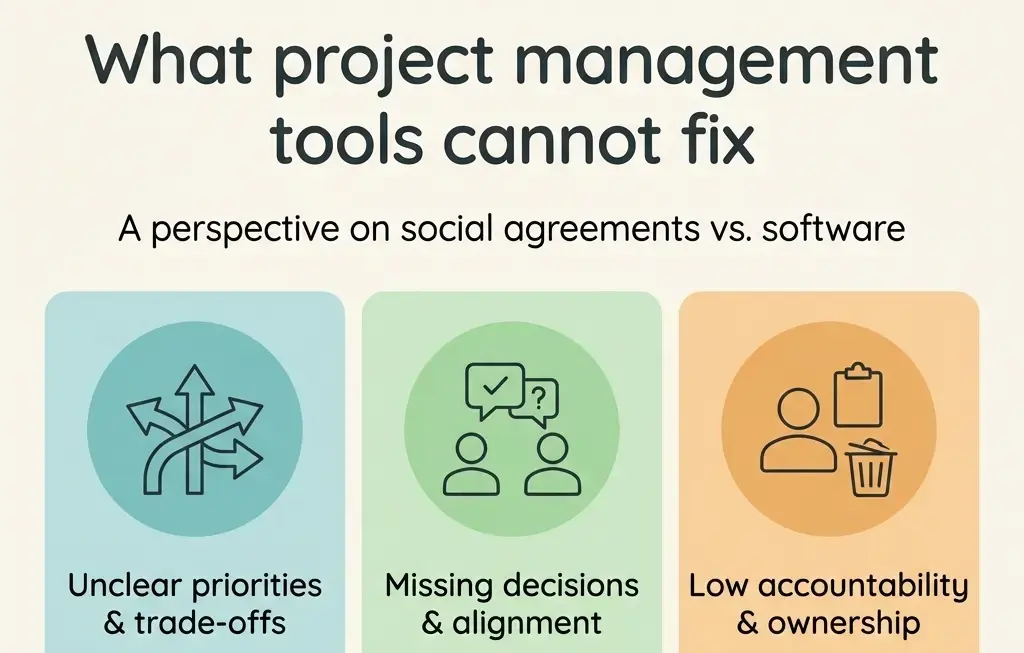
Project management tools cannot fix unclear priorities, low trust, or missing accountability. A tool like Breeze can make good habits easier and more visible, but it cannot create the agreements and leadership behaviors that make a team run well.
1. Why can't project management tools fix unclear priorities?
Because priorities are a choice, not a feature. A tool can show what is on the list, but it cannot make the tradeoff when everything feels urgent.
This is why teams can move from spreadsheets to Jira, Asana, or Breeze and still feel behind. The board gets fuller, not clearer, which is behind most of the complaints teams have about these tools.
- What the tool can do: make the queue visible and expose overload.
- What the tool cannot do: pick the one thing you will not do.
If you want a practical reset, create a small list called Not now and move anything that does not support the current goal. In Breeze, that list makes tradeoffs visible without deleting ideas.
2. Can a project management tool fix accountability and ownership?
No, not by itself. A tool can display ownership, but it cannot create it. If a task has no real owner, assigning a name in the tool just creates a false sense of control.
Accountability lives in what happens when something slips. Does someone renegotiate scope, timing, or resources, or does the team quietly absorb the cost and stop trusting the plan?
Patrick Lencioni points out that teams often avoid conflict, which keeps ownership fuzzy.
Use the tool to reinforce ownership with a simple definition:
- One owner: one person is responsible for moving the card forward.
- One next step: the owner writes a single sentence that states the next action.
- One place for updates: the status update goes on the card, not in a separate thread.
If you are rolling out Breeze (or any tool) and updates keep drifting back to chat, treat it like a rollout issue, not a motivation issue. This week-one drop-off pattern shows up when the tool is optional.
3. Why don't tools fix decision-making and stakeholder alignment?
Because misalignment is often invisible until you ship. A tool can capture a decision after it happens, but it cannot force stakeholders to agree on success or who has final say.
Tools help when you use them as the place where decisions live. On a Breeze card, write a short decision note, attach the latest file, and keep the few comments that matter in one thread.
If you want a simple standard, use a lightweight action plan format on work that keeps bouncing around. You are not trying to document everything. You are trying to make the next decision obvious.
4. Why do teams still miss deadlines after adopting project management software?
Because a deadline miss is usually a capacity problem or a planning problem, not a tracking problem. Tools make dates visible, but they cannot make time appear.
- Planning fallacy: we underestimate how long things take, especially when there are handoffs and approvals.
- Hidden work: reviews, feedback cycles, and last-minute fixes exist, but they are not represented in the plan.
Breeze helps when you make the hidden work explicit. Add a short done checklist to tasks that tend to surprise you at the end.
5. Can a tool fix communication problems and low trust?
No. Tools can reduce friction, but trust is a relationship and a pattern of behavior. If teammates do not believe updates are safe and acted on, they will not write them.
W. Edwards Deming argued that most performance issues come from the system. If people get punished for surfacing risk, your tool will fill with optimistic statuses that protect feelings, not deadlines.
What a tool can do is support a healthier loop:
- Make work visible: so questions move from private pings to shared context.
- Keep updates attached: so decisions and status are not lost in chat.
- Create room for focus: so deep work is protected instead of interrupted.
If interruptions are the problem, set a clear off-grid window in the tool where the work lives. This simple off-grid status habit works because it is specific and visible.
6. What can project management tools actually fix fast once basics are in place?
Once you have clear priorities, real owners, and a simple update expectation, tools can fix a lot of practical pain quickly. The win is fewer status questions and fewer late surprises.
Here is a simple way to separate tool problems from team problems:
| Problem | Tool can help with | Tool cannot replace | Fast fix to try |
|---|---|---|---|
| Too many "any update?" messages | One place for status, owners, and due dates | A habit of updating the work when it changes | Ask for status by opening the board, not by pinging |
| Rework and wrong versions | Files and decisions attached to the card | A definition of done and review discipline | Add a short checklist to recurring tasks |
| Handoffs that stall | Clear ownership and next step visible | Real escalation when something is blocked | Write the next step in the first line of the card |
Notice the pattern: the tool makes the right behavior easy, but it still needs a decision and a standard. Breeze works well when you want those standards to stay lightweight.
Common questions about what project management tools cannot fix
- What project management tools cannot fix?
- They cannot fix unclear priorities, avoidance of tradeoffs, low trust, or missing accountability. They can only make those problems more visible.
- Can Jira or Asana fix communication problems?
- No. They can centralize updates, but communication improves only when teams agree that the card is the place for decisions and status, not private messages.
- Should we switch project management tools or fix our process?
- Fix the process first. Switching tools is worth it only when the current tool creates duplicate updates or hides ownership. Otherwise you will move the same problems into a new UI.
- How do I improve accountability without micromanaging?
- Define ownership, require a one-line next step on active work, and ask for updates in the tool instead of in private chats. Accountability feels lighter when it is predictable.
Next steps
Project management tools cannot fix leadership gaps or unclear priorities, but they can reduce coordination cost once your basics are clear. Define what matters, who owns what, and where updates live, then pick the simplest board that supports those habits.
Next step: choose one workflow that creates the most confusion, set up a small Breeze board, and pilot it for two weeks with one rule: if the work changes, update the card. Use this adoption plan.