 Why choose Breeze
 Marketing
 Creative
 Sales
Sales Remote work
 Managers
 Product teams
 Project management
 Task management
 Kanban tool
 Time tracking
 Project reporting
 Project calendars
 Project timeline
 Team workload
 Project automation
 Project customization
 Chat
Chat Web forms
 Project roadmap
 AI
AI What's new
 Articles & guides
 Help center
 Mobile apps
 Integrations
 Developers & API
 Free tools
Do project management tools really need AI meeting notes?

Project management tools do not need to become full AI meeting note takers. AI transcription and meeting summaries can be useful, but they are usually better handled by dedicated note-taking tools, meeting apps, or general AI tools that are built for that job.
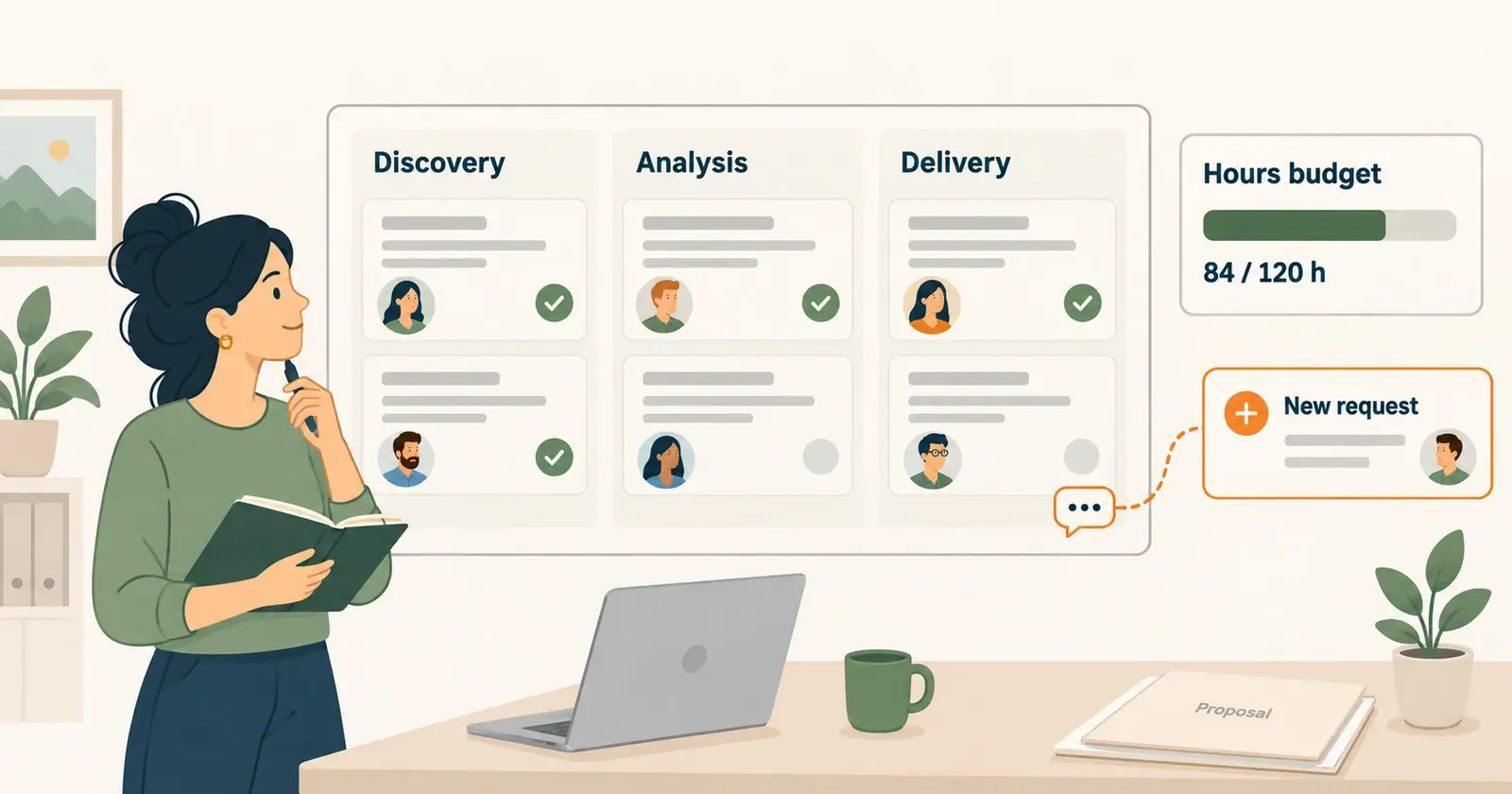
What a project management tool does need is a clear place to keep the useful output from the meeting: decisions, notes, follow-up tasks, owners, deadlines, and context. Breeze keeps this simple by letting teams add notes under each project, so meeting notes stay connected to the work without turning the project tool into another recording and transcription product.

What should meeting notes actually do?
Meeting notes should help a team remember what was decided, what changed, who owns the next step, and what needs to happen next. They do not need to be a perfect transcript of everything everyone said.
That distinction matters. A transcript captures the meeting. Good project notes capture the outcome of the meeting.
For most project teams, useful meeting notes include a few simple things:
- The main topic of the meeting
- The decisions that were made
- Important context behind those decisions
- Action items and owners
- Deadlines or follow-up dates
- Open questions that still need an answer
- Links to related files, tasks, or discussions
This is where many teams get stuck. They either write too little and lose the context, or they save too much and nobody wants to read it later. After a website redesign meeting, the team probably does not need every sentence from the call. They need the decision, the blockers, the owner, and the next step.
Where should different types of meeting notes live?
The easiest way to think about meeting notes is to separate capture from follow-through. The tool that records or summarizes the meeting does not have to be the same tool where the project record lives.
| Need | Best tool type | Good fit for | Weak spot |
|---|---|---|---|
| Full transcript | Dedicated AI note taker | Long meetings, sales calls, interviews, research calls | Can create another place where project context gets stuck |
| Quick summary or automatic transcription | Meeting app, document tool, or ChatGPT record mode | Simple internal meetings, voice notes, and rough note cleanup | Still needs review before it becomes reliable project context |
| Project record | Project notes in Breeze | Decisions, context, follow-ups, and notes tied to active work | Not meant to replace a transcription product |
| Follow-up work | Project tasks | Owners, deadlines, task lists, and accountability | Only works if the team actually turns notes into tasks |
Why full AI note taking is not always a good fit inside project management software
Full AI meeting note taking is a specialized product category. It is not just a text box with a summary button.
A good AI note-taking tool has to handle recording, audio quality, transcription, speaker detection, meeting access, calendar connections, summaries, privacy settings, consent flows, language support, editing, search, and sharing. When a project management tool tries to absorb all of that, the product can become broader without becoming better.
This is especially true for smaller teams. They usually do not want more settings, permissions, and places to check. They want to finish the meeting, know what was decided, assign the next steps, and move on.

The real problem is not that teams cannot generate enough notes. It is that meeting notes often do not turn into clear work. Someone writes a summary, shares it in chat, and then the important parts disappear. Decisions get buried. Follow-ups stay vague. A week later, people are asking the same questions again.
That is why the project management tool should not be judged only by whether it can transcribe a meeting. It should be judged by whether the useful output from the meeting becomes part of the project.
What happens when project tools add AI meeting notes?
Built-in AI meeting notes can be useful when a team already lives inside that workspace. Notion AI Meeting Notes, ClickUp AI Notetaker, and similar features have moved in this direction, with tools that capture meetings, summarize discussions, and pull out action items.
For some teams, that convenience is real. But convenience is not the same as fit. A project management tool already has to handle tasks, boards, timelines, permissions, comments, files, reports, notifications, and team workflows. Adding full meeting transcription can make the product feel more complete, but it can also make it feel heavier.
Real user feedback shows why built-in AI notes still need review
Built-in AI meeting notes can be useful, but user feedback shows why teams should not treat them as a finished project record automatically. Common issues include missed action items, weak summaries for long meetings, inaccurate transcripts, and confusion around who said what.
In Notion's case, some users have reported speaker attribution problems, poor transcription quality, missed words, and language confusion. Others say Notion AI Meeting Notes are useful for summaries and action items, so the point is not that the feature is useless. The point is that it still needs review before the notes become the project record.
ClickUp feedback follows a similar pattern. Some users say the AI Notetaker works well for quick meetings, but misses next steps or topics. Others report weaker output in long meetings, inaccurate transcriptions, and trouble turning participant comments into clearly assigned work.
Built-in AI notes can still create cleanup work
AI summaries still need review. They can miss nuance, overstate decisions, turn soft discussion into firm action items, or include details that should not be shared with everyone. Someone still needs to clean up the notes and decide what belongs in the project record.
Built-in AI notes can distract from the real workflow
For many teams, the most important meeting question is not, "Can the tool transcribe this?" The better question is, "After the meeting ends, where do the decisions and tasks go?" If that answer is unclear, AI note taking just creates a better-looking pile of notes.
What are the best alternatives to built-in AI meeting notes?
The best alternative is not one specific app. It depends on what kind of meeting notes the team actually needs. Heavy meeting workflows need better capture. Simple project meetings need cleaner follow-through.
Use dedicated AI note takers for heavy meeting workflows
Dedicated AI note takers are usually the better choice when meetings are long, frequent, customer-facing, or important enough to need a searchable transcript.
Tools like Otter, Fireflies, Fathom, tl;dv, Granola, Avoma, and similar products are built around meeting capture. They are usually better suited for sales calls, user interviews, hiring calls, client meetings, research sessions, and recurring meetings where people may need the full conversation later.
The tradeoff is another tool in the workflow. The benefit is that dedicated note takers usually spend more product effort on the hard parts of meeting capture, such as transcription quality, speaker identification, recording flows, and searchable meeting history.
Use the meeting tools you already have
Some teams already have note-taking features inside the tools they use for meetings. Zoom AI Companion, Google Meet, Microsoft Teams, and other workplace tools have been adding AI summaries and meeting assistance.
Use ChatGPT to record, transcribe, or clean up meeting notes
ChatGPT can be part of the capture step, not just the cleanup step. With ChatGPT record mode, available in the macOS desktop app for supported paid workspaces, you can record meetings, brainstorms, or voice notes and have ChatGPT transcribe and summarize them.

ChatGPT is also useful when you already have rough notes. You can paste notes from a call and ask for a summary, action items, decisions, risks, open questions, or a cleaner version to add to the project.
For example, a simple prompt could ask ChatGPT to:
- Summarize the meeting in plain language
- List the decisions made
- Extract action items with owners and dates
- Separate confirmed decisions from open questions
- Rewrite the notes so they are ready to save under the project
This is often enough for small teams. You can use ChatGPT for automatic transcription when you need it, or just use it to clean up rough notes when someone already captured the important points.
Use the project tool for the final project record
The project management tool is where the final version should live. Not the raw transcript, every side comment, or every sentence from the call.
In Breeze, teams can add notes under each project and turn follow-ups into trackable tasks. That makes it a practical place to keep meeting notes connected to the actual work: what was decided, why it matters, what changed, who owns the next step, and what needs to happen next.
How to keep meeting notes connected to project work
The simplest workflow is to treat meeting notes as a bridge between conversation and action. The meeting can happen anywhere, and the notes can start anywhere, but the final version should end up where the project work happens.
A good meeting note workflow is simple: capture the rough notes, clean them up into decisions and action items, add the final notes under the related project, then create tasks for anything that needs follow-up.
A simple meeting notes format
Most project meetings do not need a complicated structure. A simple format is easier to write, easier to read, and easier to reuse.
- Meeting: Website redesign check-in
- Date: May 14, 2026
- Attendees: Anna, Mark, Lisa
- Decision: Use the shorter homepage version for the first test.
- Notes: The team agreed that the current page explains too much before showing the product. The shorter version should make the main message clearer.
- Action items: Anna updates the copy, Mark reviews screenshots, Lisa prepares the test page.
- Open questions: Should pricing appear above the fold?
That kind of note is short, but it gives the team what they need. Anyone opening the project later can understand the decision and see what needs to happen next.
Turn action items into tasks
Meeting notes are useful, but they are not a replacement for tasks. If something needs to be done, it should become a task with an owner and a due date. Keep the note as context, then turn each real next step into work the team can track.
When do you actually need AI meeting notes?
AI meeting notes are useful when the meeting itself contains too much information to capture manually. They are less useful when the meeting is short, the decisions are simple, and the team only needs a clean summary.
You probably need AI meeting notes when:
- You have many meetings every week
- People often miss meetings and need a summary
- You need full transcripts for reference
- You run sales calls or customer interviews
- You need to search past conversations
- You need speaker attribution
- You often lose action items after meetings
You probably do not need full AI meeting notes when:
- The meeting is short and focused
- One person can write the summary
- The team only needs decisions and next steps
- The same people attend every meeting
- The important output can fit in a short project note
The point is not to avoid AI. The point is to use it where it helps and avoid adding complexity where it does not, the same balance that decides where AI fits in project management at all.
Where should the final meeting notes go?
If the meeting is about a project, the final meeting notes should live with that project. That is where people will look when they want to understand what changed, why a decision was made, or what needs to happen next.
Leaving the final notes inside a transcription tool can be useful for archive purposes, but it does not always help the project team. People working on the project are usually checking the project, the tasks, the timeline, and the latest decisions.
This is a practical division of work:
- Use a note-taking tool if you need advanced meeting capture and transcription.
- Use ChatGPT record mode if you want automatic transcription and summaries without relying on your project management tool for that job.
- Use ChatGPT or another AI tool if you need help cleaning up rough notes.
- Use Breeze to keep the final project notes, decisions, and follow-up work in context.
That keeps the workflow simple. The team gets the benefit of AI where it makes sense, without turning the project management tool into something heavier than it needs to be.
Common questions about meeting notes and project management tools
- Do project management tools need AI meeting notes?
- No. Project management tools need a clear way to store decisions, notes, and action items. AI transcription can happen in a dedicated note-taking tool, meeting app, or general AI tool.
- Are AI meeting note takers worth it?
- They can be worth it for teams with lots of meetings, long calls, customer interviews, sales calls, or research sessions. For simple internal meetings, a short summary and clear tasks are often enough.
- Should meeting notes be stored in the project management tool?
- Yes, the final useful notes should usually be stored with the project. Raw transcripts can stay in the note-taking tool, but decisions and follow-ups should live where the team manages the work.
- Can ChatGPT transcribe meeting notes?
- Yes. ChatGPT record mode can transcribe and summarize meetings, brainstorms, and voice notes in the macOS desktop app for supported paid workspaces. You can also paste rough notes into ChatGPT and ask it to turn them into summaries, decisions, action items, risks, and open questions. The output should still be reviewed before it is shared or added to the project.
- What should be included in project meeting notes?
- Good project meeting notes should include the meeting topic, date, main decisions, important context, action items, owners, deadlines, open questions, and links to related work.
- What is the difference between meeting notes and a meeting transcript?
- A transcript captures what was said. Meeting notes capture what matters after the meeting: decisions, context, next steps, and follow-up work.
The simpler way to handle meeting notes
AI meeting notes are useful, but they are not the same thing as project follow-through. A dedicated tool, meeting app, or ChatGPT can capture the meeting. The project management tool should keep the final notes, decisions, and tasks where the team actually works.
With Breeze, meeting notes can stay connected to the project without adding another layer of AI features the team may not need. The goal is not to save every word from every meeting. The goal is to make sure the important parts are easy to find and easy to act on.