 Why choose Breeze
 Marketing
 Creative
 Sales
Sales Remote work
 Managers
 Product teams
 Project management
 Task management
 Kanban tool
 Time tracking
 Project reporting
 Project calendars
 Project timeline
 Team workload
 Project automation
 Project customization
 Chat
Chat Web forms
 Project roadmap
 AI
AI What's new
 Articles & guides
 Help center
 Mobile apps
 Integrations
 Developers & API
 Free tools
monday.com AI credits pricing: work platform plans and costs

New monday work platform accounts opened on or after 6 May 2026 must buy an AI credit bundle alongside their seats. The minimum is 1,000 credits on Basic, 2,000 on Standard and 3,000 on Pro. Those minimum bundles are currently discounted to $0.
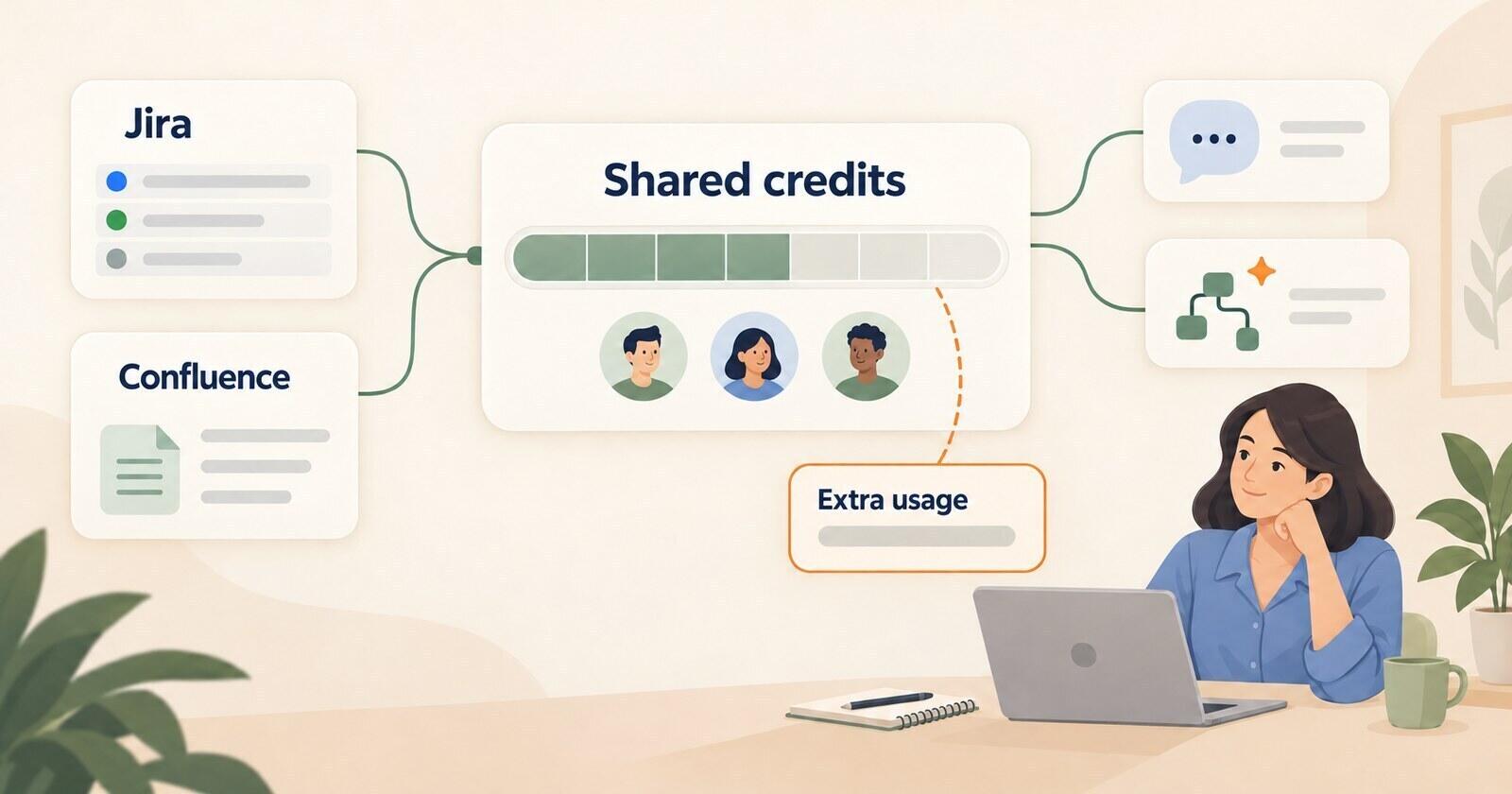
The bundle is shared across the account. Estimate the work it needs to cover before choosing: AI blocks use 8 credits per action, the notetaker uses 120 per meeting hour, and agent consumption varies by task.

Disclosure: We make Breeze, which is included below as a project management alternative.
Contents
- Work platform plans and bundles
- Bundle prices and discounts
- The annual bill for ten people
- Credit consumption by feature
- How far a bundle goes
- Other AI billing models
- When to buy a larger bundle
Which monday.com plans include AI credits?
All paid monday work platform plans include an AI credit bundle; Free does not. The monday.com pricing page lists the seat prices and available bundles below. Seat prices are per month on annual billing; monthly billing costs more.
| Plan | Seat price billed yearly | Required credits per month | Bundle options | AI package |
|---|---|---|---|---|
| Free | $0, up to 2 seats | None | None | No AI features |
| Basic | $9 per seat | 1,000 | 1,000 | Basic AI, 3 tools |
| Standard | $12 per seat | 2,000 | 2,000, 4,000 or 8,000 | AI essentials, 5 tools |
| Pro | $19 per seat | 3,000 | 3,000, 4,000, 8,000 or 20,000 | Premium AI, 6 tools |
| Enterprise | Custom | By sales | Custom | Enterprise-grade AI, 6 tools |
The AI pricing model applies to new work platform accounts from 6 May 2026. It does not cover monday CRM, dev or service, or replace the existing terms of older accounts.
Seats are sold in buckets as well. Plans start at three seats and then step up in fives, so a team of four pays for five and a team of eleven pays for fifteen. The credit bundle, by contrast, does not scale with seats: ten people on Standard share 2,000 credits, and so do fifteen.
What do monday.com AI credits cost?
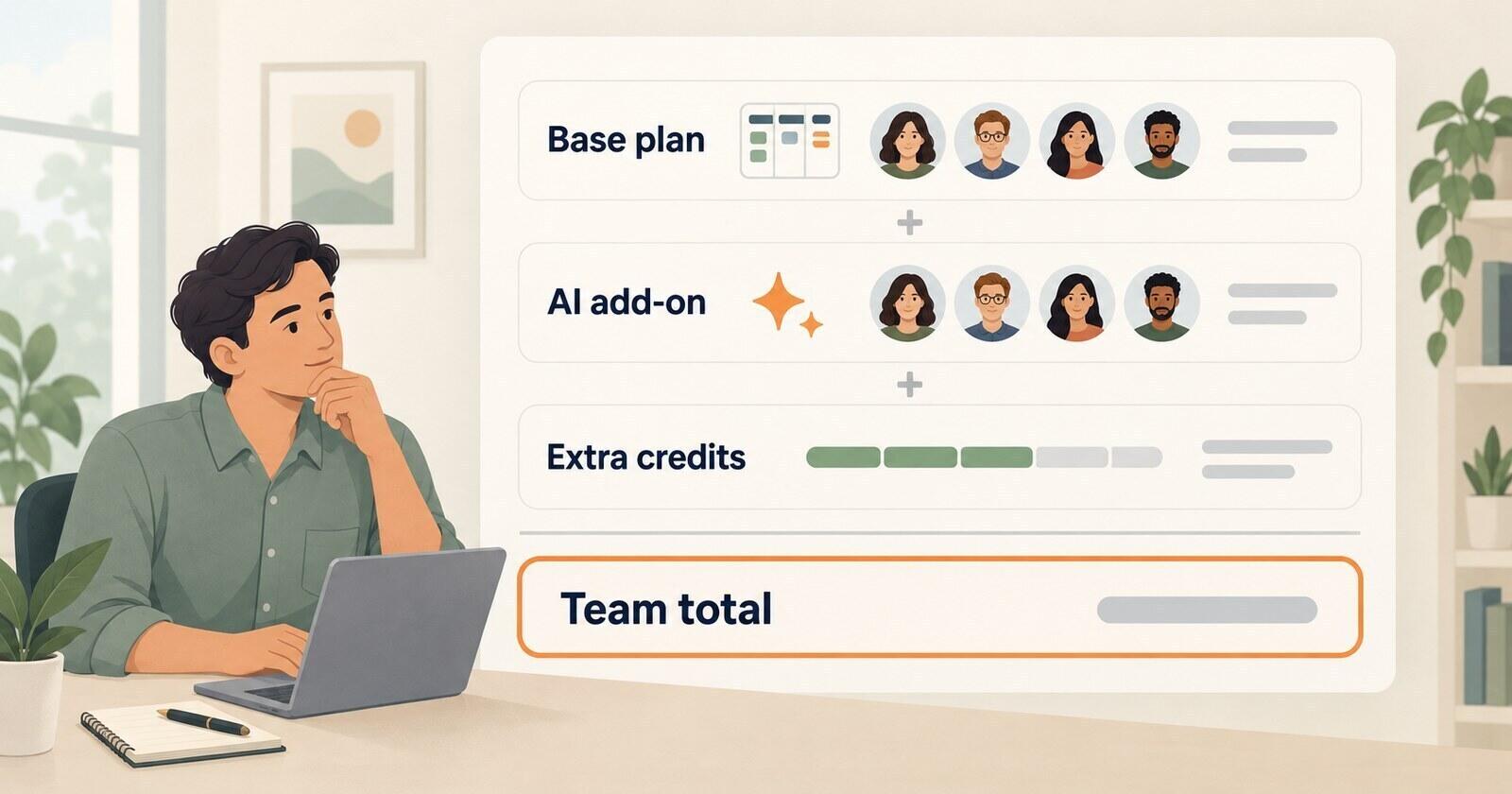
For ten Standard seats on annual billing, the seat cost is equivalent to $120 a month. The required 2,000-credit bundle is listed at $20, with a current $20 discount, leaving the total at $120 a month.
The required Basic bundle is listed at $10 a month and Pro at $30, with matching introductory discounts. These prices do not establish the cost of the larger optional bundles.
The $0 bundle price is an introductory discount, with no published end date. Compare the discounted total and the listed bundle cost when estimating a renewal budget.
When the bundle is used up, the route is to move to the next bundle for your tier, which does not change the seat count: 2,000 to 4,000 or 8,000 on Standard, 3,000 to 4,000, 8,000 or 20,000 on Pro. The AI credits article points admins to the credits usage tab in AI governance to buy more. The public pricing cards show the minimum bundles; larger-bundle prices must be obtained in the purchase flow.
What does a ten-person team pay per year?
Yearly billing, work platform only, no tax. The credit column shows the list rate for the required bundle and what it costs today with the offer applied.
| Plan | Seats per year | Required credits | Bundle per year at list | Total today | Total at list |
|---|---|---|---|---|---|
| Basic | $1,080 | 1,000 a month | $120 | $1,080 | $1,200 |
| Standard | $1,440 | 2,000 a month | $240 | $1,440 | $1,680 |
| Pro | $2,280 | 3,000 a month | $360 | $2,280 | $2,640 |
The allowance is pooled, not reserved per person. A Standard team that needs more than 2,000 credits can select 4,000 or 8,000; Pro also offers 20,000. Get the larger bundle's price before comparing it with a higher plan, because the minimum-bundle discount does not tell you that total.
The seat buckets add their own rounding. Eleven people pay for fifteen seats, $1,620 a year on Basic and $2,160 on Standard, while the credit bundle stays the same size. For a team right at a bucket edge, the credits per head drop as the seat bill jumps.
How many credits does one AI action use?
It depends on the feature, and for agents and the sidekick on how much work the request involves. monday publishes a consumption table, and these are the figures to plan with:
- AI blocks: 8 credits per action, counted once per item in any 24-hour window; subitems count separately.
- AI Notetaker: 120 credits per hour of meeting, measured by the minute.
- monday sidekick: roughly 10 to 30 credits for a simple message, 30 to 80 for a chart or a board created from a brief, 80 to 150 for cross-board analysis, and more than 150 for batch updates or a board rebuild.
- monday agents: roughly 10 to 50 credits for a simple task, 50 to 150 for a multi-step workflow, 150 to 250 for research or reports, and more than 250 for multi-system work. One run can contain several tasks.
- monday vibe: per message while building, from about 10 to 20 on the lightest model to 50 to 500 on the heaviest, plus credits every time a published app runs AI.
- AI workflows: per run by complexity, with a cap of 3 active workflows on Standard, 20 on Pro and 250 on Enterprise.
Model choice can change consumption. In vibe and agents you can pick the model, and the model guidance puts a single message at 10 to 20 credits on the fast model and 50 to 500 on the most capable one. Other features have their own consumption rules; Sidekick and AI workflows also vary with the work requested.
How far does a credit bundle go?
If you record meetings, the notetaker can use the allowance quickly. At 120 credits an hour, Standard's 2,000 credits cover about 16.7 hours a month for the whole account if nothing else uses credits. Basic's 1,000 cover about 8.3 hours.
monday's worked examples show why frequency matters. A request-routing agent running 15 times a day uses about 5,400 credits a month, which fits Standard's 8,000-credit bundle. The CV-screening example uses 12,500 credits and the ticket-triage example 19,800. Both exceed Standard's largest bundle; the triage example is close to Pro's 20,000-credit option.
A daily Sidekick status check on one board is estimated at about 770 credits a month; ten charts or reports at about 660. At 8 credits an action, 250 AI-block actions use 2,000 credits. Add all the planned features together before deciding whether the minimum bundle is enough.
Admins receive alerts at 80% and 100%. Some features continue for a short grace period, then AI usage pauses until more credits are bought. Work that does not use AI keeps running. Admins can set feature and user limits in AI governance; Enterprise also supports restrictions by role.
What do the other tools charge for AI?
New monday work platform accounts buy a required bundle. Atlassian includes a Rovo allowance with paid seats and bills extra usage: the Rovo credit model provides enough for 25 basic messages for a ten-person Jira Standard team. ClickUp Brain uses an optional add-on costing $9 or $28 per user per month on annual billing, across the whole Workspace.
Compare the same workload across the AI project management tools. If your existing account is already at its limit, see what happens when AI credits run out.
Should you size the bundle up, or move the work?
Buy more credits when the measured benefit of a workflow justifies the quoted bundle price. Compare the time saved with the full bill, including seats. Meeting length, agent frequency and model choice all affect that calculation.
- Stay on the required bundle if: measured use across all features stays within the allowance.
- Buy the next bundle if: measured use exceeds the allowance and the workflow is worth the quoted cost. Measure a representative month first; monday shows credit use per run within about 15 minutes.
- Switch models before buying credits: in vibe and agents, test whether a less expensive model produces an acceptable result for the task.
- Allow for the discount ending: minimum bundles are currently discounted to $0, with no published end date.
Include export, setup and retraining in the cost of changing tools. For a team that mainly needs a project board and an assistant, Breeze includes its AI at $9 per user per month billed yearly, or $10 billed monthly, with every feature included. The Breeze MCP server connects outside assistants to the projects.
Breeze does not replace monday agents, vibe apps or the notetaker. If those features are central to the workflow, compare the larger bundles before considering a move.