
 Why choose Breeze
 Marketing
 Creative
 Sales
Sales Remote work
 Managers
 Product teams
 Project management
 Task management
 Kanban tool
 Time tracking
 Project reporting
 Project calendars
 Project timeline
 Team workload
 Project automation
 Project customization
 Chat
Chat Web forms
 Project roadmap
 AI
AI What's new
 Articles & guides
 Help center
 Mobile apps
 Integrations
 Developers & API
 Free tools
Best project management software for small businesses in 2026

Small businesses need project management software that is easy to adopt, affordable to run, and clear enough for lean teams that do not have time for a heavy rollout. The right software helps you track work, deadlines, and handoffs without paying for enterprise complexity. If you are comparing leaner setups or planning for growth, also see our guides to project management software for freelancers and project management software for large businesses. Small teams usually run time tracking next to a project tool, so the best time tracking tools for small teams make a useful companion.
Disclosure: Breeze publishes this comparison and is one of the tools listed below. Small business is our home turf; if your team is large or has enterprise security needs, we'll be honest about where bigger tools fit better.
How we chose these tools
We picked candidates that work well between 2 and 50 people without forcing enterprise plans, then ranked them on:
- Pricing at small scale — honest free tier, simple per-user paid tier, no minimum-seat traps.
- Feature breadth without enterprise overhead — you get reporting and time tracking without buying SSO and audit logs you don't need.
- Customer support quality — small businesses typically don't have IT to escalate to.
- Setup time — productive within a week, not a quarter.
Quick answer: best project management software for small businesses in 2026
- Best overall: Breeze
- Best for simple boards: Trello
- Best for flexible workflows: Monday.com
- Best for scaling processes: ClickUp
- Best for docs plus tasks: Notion
| Tool | Best for |
|---|---|
| Breeze | all-around fit |
| Trello | for simple boards |
| Monday.com | for flexible workflows |
| ClickUp | for scaling processes |
| Notion | for docs plus tasks |
List of project management software for small businesses
Here are the best project management software options for small businesses in 2026 to improve collaboration, handle projects, and simplify day-to-day work:
Breeze
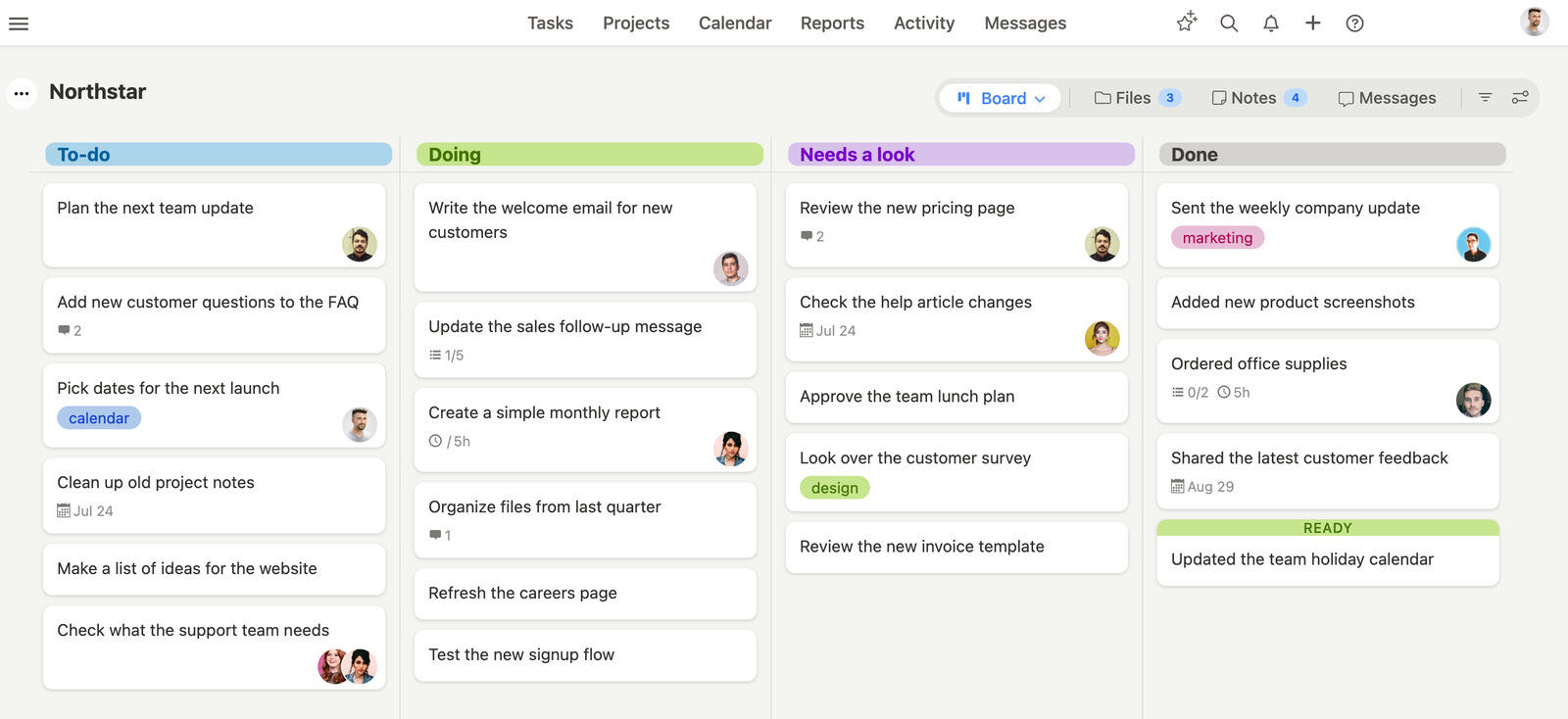
- Pricing: Simple pricing at $9 per user per month with all features included; save 10% with yearly billing
- Rating: 4.4/5 on Capterra
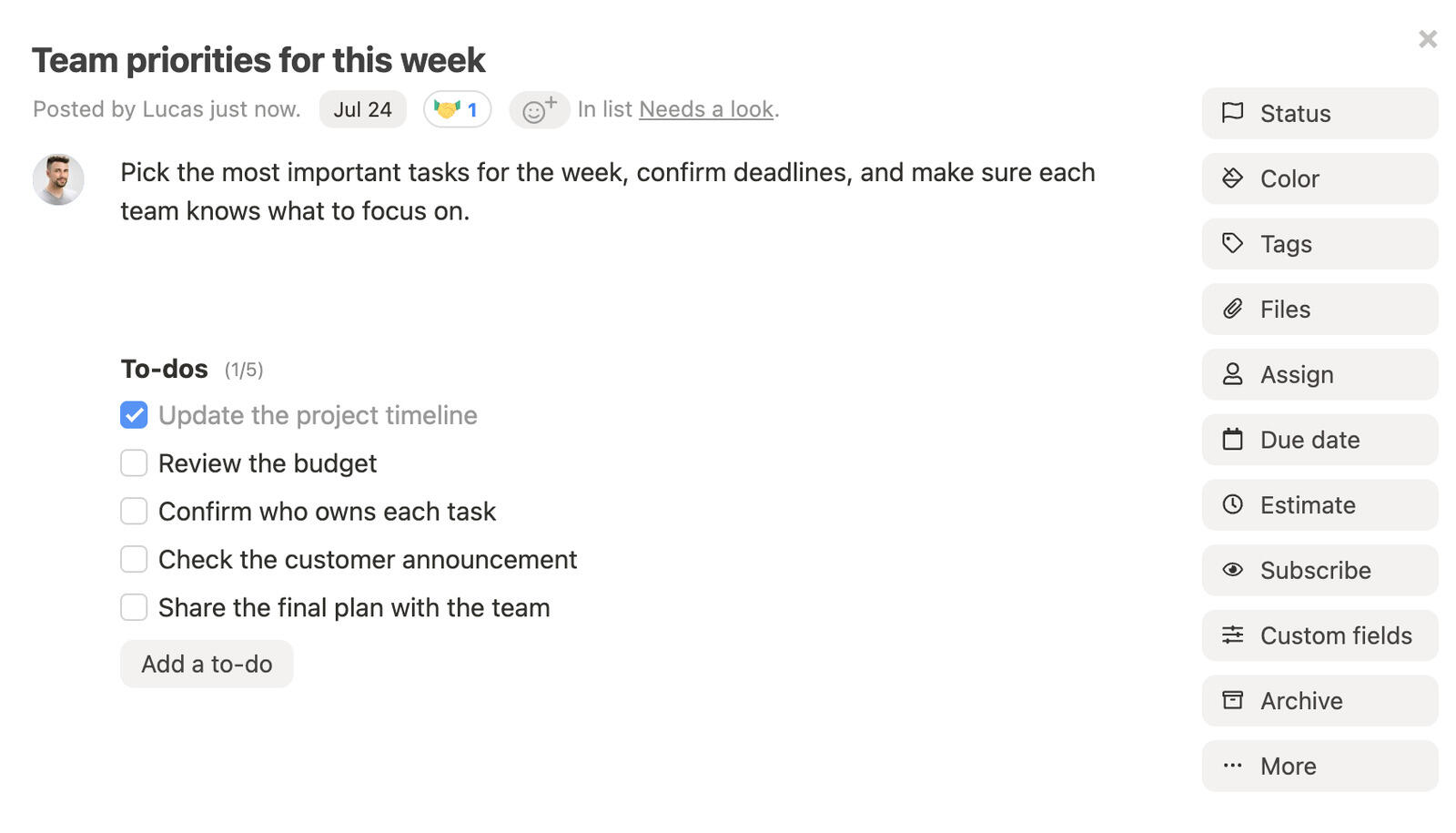
Breeze gives small businesses a clear way to track work, hit deadlines, and stay organized without paying for complexity they will never use. It is especially well suited to smaller teams that want to get started quickly, and features like built-in chat, calendar integration, time tracking, and team workload management keep everyone aligned in one place.
Where Breeze fits
- Built-in chat: Keep conversations in the same workspace as the work, which helps the team make decisions faster.
- Calendar integration: Sync tasks and milestones with personal and team calendars to avoid missing deadlines.
- Time tracking: Monitor work hours directly in Breeze, allowing accurate billing and understanding of where time is spent.
- Team workload management: Visualize each team member's workload to distribute tasks evenly and prevent burnout.
- Reporting and insights: Create reports on project progress and team productivity.
- File sharing: Share documents directly in tasks or chat to keep all resources in one place.
Where Breeze isn't the right fit: Enterprise governance, deep agile sprint planning, complex configurable databases, or advanced portfolio management at scale — that's not where we focus.
What users say about Breeze:
"We're a client to a company that manages their workflow and breeze. the best feature is the visualization of "to-Do" items on the dashboard in different columns. This is a big help to manage our workflow with multiple teams."
Source: Capterra
Trello

- Pricing: Free for basic use, with paid plans starting at $5 per user per month
- Rating: 4.5/5 on Capterra
Trello works well for SMBs that want a simple, visual way to organize tasks. Small teams can create tasks, set deadlines, and prioritize work without a lot of setup. Power-ups add extra functionality as needs grow, so Trello can support both day-to-day work and longer projects.
Where Trello fits
- Visual boards: Drag-and-drop cards provide a clear visual overview of tasks and progress.
- Collaboration: Team members and clients can easily interact on shared boards.
- Scalable: Integrations like time tracking or calendars adapt as your needs grow.
- User-friendly: Trello's easy-to-understand interface helps SMBs get started quickly without extensive training.
Where Trello isn't the right fit: Teams past about 10 people, anyone needing cross-board rollup, or workflows with hierarchical project structures.
If you want to compare similar tools, we also have a list of Trello alternatives.
What users say about Trello:
"Trello is a project management tool that makes collaboration simple and, I would say, even fun. The reality is that it serves almost everything, whether you are organizing projects at work, household chores, trips or anything else. Individual cards can contain task lists, images, attachments, delivery dates, color labels and comments from other people who share the board with you. You can have as many boards as you want, use one for "Overall, I'd recommend this product to anyone who is looking to get started on simple task tracking, especially within a team. Hoping the product will release more features, like the ones mentioned above."
Source: Capterra
Monday.com

- Pricing: Starting at $9 per user per month
- Rating: 4.6/5 on Capterra
Monday.com helps SMBs manage tasks, workflows, and projects flexibly. Its visual dashboards let small teams see project status at a glance. Automation features reduce manual tasks, giving the team more time to focus on higher-value work.
Where Monday.com fits
- Customizable dashboards: Keep all project details in one central place.
- Automation: Set up automations to save time on routine tasks.
- Real-time updates: Share updates with clients and team members, keeping everyone aligned.
- Versatility: Adaptable features make it easy to tailor Monday.com to the specific needs of different departments or teams.
Where Monday.com isn't the right fit: Very small teams (the 3-user minimum is a tax), or anyone wanting pricing without forced tier jumps as the team grows.
If you want to compare similar tools, we also have a list of Monday.com alternatives.
What users say about Monday.com:
"Monday has streamlined our processes and given us a better understanding of each other's workloads, which is essential since our entire department is remote. We can quickly ask questions on specific tasks/projects, attach essential documentation, and collaborate at the touch of a button. For me, it's made life so much easier. I use it to create content calendars, social posts, and manage the various projects between our web development manager and myself. It was a game changer!"
Source: Capterra
ClickUp

- Pricing: Free for basic use, with premium plans starting at $9 per user per month
- Rating: 4.6/5 on Capterra
ClickUp is an adaptable tool for managing business tasks. It brings together features like task management, time tracking, and communication, all in one place. This reduces the need for separate apps, helping small teams stay organized. Customizable workflows and built-in automations boost productivity without the complexity of multiple tools.
Where ClickUp fits
- All-in-one solution: Manage documents, tasks, and communication in one platform.
- Customizable workflows: Flexible features let you set up processes that fit your team's needs.
- Templates: Use pre-built templates to save time and maintain consistency.
- Integration capabilities: Connect ClickUp with popular tools like Slack and Google Drive for a seamless workflow.
Where ClickUp isn't the right fit: Teams that want a tool that works on day one without configuration, or organizations without dedicated PM-admin ownership.
If you want to compare similar tools, we also have a list of ClickUp alternatives.
What users say about ClickUp:
"Our company primarily uses this product to coordinate our digital strategy, sales, and design teams to execute campaigns for our digital advertising clients. The ease of assigning tasks and updating the team members working on those projects has helped us to eliminate a lot of email clutter and unnecessary meetings. Employees can see live updates from others, be tagged in comments, and see upcoming deadlines without having to interrupt the workflow of another person. There is also a mobile version that some of our team uses. Tasks are searchable which is a huge plus for us as we offer a lot of different products to our clients."
Source: Capterra
Asana

- Pricing: Free for basic use, premium features start at $10.99 per user per month
- Rating: 4.5/5 on Capterra
Asana gives SMBs a clear way to manage tasks, deadlines, and overlapping projects. The visual timeline makes progress easier to follow, while the multi-project view keeps work organized across teams or clients. It is a strong fit for small businesses that need structure without a steep learning curve.
Where Asana fits
- Easy to use: Asana's design makes it accessible to everyone on your team.
- Multiple projects: Manage different clients or teams without mixing up tasks.
- Visual timelines: Stay on top of deadlines and track progress easily.
- Team transparency: Assign tasks and provide visibility into project responsibilities for all team members.
Where Asana isn't the right fit: Tiny teams (under 5 people) where the depth is overhead, or engineering teams that need real issue tracking — Jira fits better.
If you want to compare similar tools, we also have a list of Asana alternatives.
What users say about Asana:
"Overall I have had a great experience. I rarely need support so not really sure what to say there. The one thing I did ask for (working with Google Aliases) they refused to do, so I guess if you are good with their program as is, you will be fine. Just don't expect them to go above and beyond to work with you."
Source: Capterra
Smartsheet

- Pricing: Starting at €11 per user per month, with advanced plans available for larger teams
- Rating: 4.5/5 on Capterra
Smartsheet combines a familiar spreadsheet layout with powerful project management features. It's a strong fit for SMBs that need flexibility. Teams can manage projects, set deadlines, and collaborate without much friction. Resource allocation features help balance workloads and keep projects on track without overloading the team. Smartsheet is a strong fit for teams that want project tracking in a familiar spreadsheet-style environment.
Where Smartsheet fits
- Familiar interface: Spreadsheet-like layout is easy to understand and use.
- Collaboration: Share sheets with your team and clients to stay informed.
- Automation: Set up automated reminders and status updates.
- Resource management: Allocate team resources effectively and handle availability to avoid overburdening team members.
Where Smartsheet isn't the right fit: Designers and creative-led teams who think visually rather than in rows, or smaller teams where the spreadsheet UX is overkill.
What users say about Smartsheet:
"I also valued Smartsheet's robust reporting functionalities. The platform facilitated the generation of real-time reports, offering valuable insights into the advancement of projects, allocation of resources, and identification of potential bottlenecks. These reports played a crucial role in keeping stakeholders well-informed and facilitating data-driven decision-making."
Source: Capterra
Notion

- Pricing: Free for personal use, with team plans starting at $10 per user per month
- Rating: 4.7/5 on Capterra
Notion combines project management and note-taking in one workspace for SMBs. Small teams can track tasks, store documents, and keep shared knowledge in one place. Customizable dashboards make it easy to adapt the workspace to different projects without adding extra tools.
Where Notion fits
- Customizable layouts: Organize workspaces to match your project needs.
- All-in-one platform: Manage tasks, notes, and documents in a single place.
- Collaboration: Invite team members to view and edit workspaces for seamless collaboration.
- Knowledge management: Store and organize documents and information in an accessible way.
Where Notion isn't the right fit: As a primary PM tool — native time tracking, workload, and team-scale task management aren't really there.
If you want to compare similar tools, we also have a list of Notion alternatives.
What users say about Notion:
"I built a lot of different databases and dashboards and I have to say that it allows me each time to achieve 99% of what I wanted. I just regret that the AI feature is not included in our licence!"
Source: Capterra
Basecamp

- Pricing: Flat rate of $299 per month for unlimited users or $15 per user per month
- Rating: 4.3/5 on Capterra
Basecamp is a solid option for SMBs that need a central platform for tasks, files, and communications. Its interface is easy for the whole team to use. Automatic check-ins keep everyone updated without constant meetings. It can reduce the number of tools a small team needs to juggle.
Where Basecamp fits
- All-in-one platform: Manage tasks, files, and communication in one tool.
- Automatic check-ins: Get updates from your team without lengthy meetings.
- Client access: Invite clients to view project progress and provide feedback easily.
- Message boards: Keep all project discussions in one place, reducing the need for scattered email threads.
Where Basecamp isn't the right fit: Tiny teams under 10 people (the flat fee is too expensive), or teams that need real reporting, time tracking, or scheduling features.
If you want to compare similar tools, we also have a list of Basecamp alternatives.
What users say about Basecamp:
"Our overall experience has been great. We were using a custom-built tool for team communication, but ultimately decided that Basecamp just has more features and will save us a lot of cash in the long run versus building the tool ourselves. It's nice that there is a flat charge for the service, instead of charging by the user like some other services do. This saves us a considerable amount of money."
Source: Capterra
Airtable

- Pricing: Free for basic use, advanced features start at $10 per user per month
- Rating: 4.7/5 on Capterra
Airtable is a useful option for SMBs that need flexible project management with a spreadsheet-style interface. Small teams can track projects, store data, and visualize work in grids, calendars, or kanban boards. Airtable integrates with popular apps, which makes it easier for SMBs to manage projects and keep tools in sync.
Where Airtable fits
- Custom views: Organize data in grid, calendar, or Kanban formats.
- Templates: Use pre-built templates to set up projects quickly.
- Integrations: Connect with existing tools like Slack and Google Drive.
- Collaborative workspaces: Allow team members to update information and collaborate in real time.
Where Airtable isn't the right fit: As a primary task tracker — designers and operators don't want to update database rows for daily work.
If you want to compare similar tools, we also have a list of Airtable alternatives.
What users say about Airtable:
"Despite it's cost and some features we'd still like to see, Airtable is an absolute no-brainer for us. We can track our constituents and their engagement so much more easily than with Excel or a random CRM that doesn't really match our needs. I also have moved most of my content planning, resource banking, quote caching, and attendance taking to Airtable. It's honestly SO multifunctional!"
Source: Capterra
FAQ
- What is the best project management software for small businesses in 2026?
- Breeze is the natural fit for small businesses (under 50 people) that want simple PM without enterprise overhead. Asana fits when you want a free tier with growth runway. Trello is the simpler option for kanban-only work. Monday.com fits when visual dashboards matter most.
- What should teams look for in project management software for small businesses?
- Look for a tool that matches how your team plans work, shares updates, and reviews progress. The right tool should be easy to adopt, flexible enough for your workflow, and clear enough that important work does not get lost.
- Which tool works best for small teams that want more workflow customization as they grow?
- ClickUp is a strong fit for small teams that want more workflow customization as they grow. Breeze is better when you want a simpler daily workflow with less setup and less admin overhead.
- Should I choose a simple tool or a more customizable one?
- Choose the simpler option if speed, clarity, and fast team adoption matter most. Choose the more customizable option if your team needs deeper automation, specialized workflows, or more detailed reporting.
Takeaway
The best project management software for small businesses gives lean teams structure, visibility, and accountability without creating extra admin work. Choose software that fits the way your team already works, then expand into more customization only when you actually need it. If you rely on contractors as you grow, knowing how to hire freelancers for your small business can also help you scale smoothly.