 Why choose Breeze
 Marketing
 Creative
 Sales
Sales Remote work
 Managers
 Product teams
 Project management
 Task management
 Kanban tool
 Time tracking
 Project reporting
 Project calendars
 Project timeline
 Team workload
 Project automation
 Project customization
 Chat
Chat Web forms
 Project roadmap
 AI
AI What's new
 Articles & guides
 Help center
 Mobile apps
 Integrations
 Developers & API
 Free tools
Best project management software for large businesses in 2026

Large businesses need project management software that can coordinate multiple teams, reporting layers, dependencies, and permissions without turning rollout into a project of its own. The best software gives leaders visibility across programs while still being usable for the teams doing the work every day. If you are comparing how needs change by company stage, see our guides to project management software for small businesses and project collaboration tools.
Disclosure: Breeze publishes this comparison and is one of the tools listed below. Large enterprise is not where Breeze fits best — we're more direct about that than most listicles in our category. The bigger commercial tools (Wrike, Monday, ClickUp Enterprise, Smartsheet) genuinely earn their place here.
How we chose these tools
We picked candidates that survive at scale, not just demo well, then ranked them on:
- Identity and access — SSO/SAML, SCIM provisioning, role-based access, audit trails.
- Performance at scale — large workspaces, deep hierarchies, thousands of users.
- Vendor SLAs and support — named CSM, response-time guarantees, contracted uptime.
- Compliance footprint — SOC 2, ISO 27001, GDPR, HIPAA where relevant.
Quick answer: best project management software for large businesses in 2026
- Best overall: Adobe Workfront (the enterprise work management standard)
- Best for software programs: Jira
- Best for portfolio reporting: Smartsheet
- Best for customizable scale: ClickUp
| Tool | Best for |
|---|---|
| Adobe Workfront | for enterprise work management |
| Jira | for software programs |
| Smartsheet | for portfolio reporting |
| ClickUp | for customizable scale |
List of project management software for large businesses
Here are the best project management software options for large businesses that need stronger governance, reporting, and cross-team coordination:
- ClickUp
- Microsoft Project
- Monday.com
- Asana
- Wrike
- Smartsheet
- Jira
- Teamwork.com
- Zoho Projects
- Adobe Workfront
ClickUp

- Pricing: Free for basic use, with premium plans starting at $9 per user per month
- Rating: 4.6/5 on Capterra
ClickUp helps enterprises manage complex projects by enabling workflows that fit specific departmental needs. Its unified platform eliminates the need for multiple tools, simplifies communication, and improves task management across teams.
Where ClickUp fits
- Custom workflows: Create workflows to meet the specific needs of various teams and departments.
- All-in-one dashboard: Track tasks, set goals, and manage resources through a unified interface.
- Time tracking and reports: Generate detailed reports to monitor productivity and identify inefficiencies.
- Automation: Automate recurring tasks like notifications, updates, or status changes.
Where ClickUp isn't the right fit: Teams that want a tool that works on day one without configuration, or organizations without dedicated PM-admin ownership.
If you want to compare similar tools, we also have a list of ClickUp alternatives.
What users say about ClickUp:
"There are lots of advantages to using ClickUp. Other apps don't allow us to set the status of specific tasks, such as whether a project is in development mode, testing mode, completed, or closed, for example. In addition to prioritising our tasks, we can track our progress and set reminders in this app. Thanks to ClickUp and the wonderful team out there."
Source: Capterra
Microsoft Project

- Pricing: Starting at $10 per user per month.
- Rating: 4.4/5 on Capterra
Microsoft Project can be used by large businesses to manage complex workflows. Its detailed Gantt charts and budgeting tools enable teams to stay on track with strict timelines. Integration with Microsoft 365 further improves collaboration and resource management across departments.
Where Microsoft Project fits
- Advanced Gantt charts: Plan and track tasks with tools designed for complex workflows.
- Microsoft 365 integration: Enhance productivity with seamless connectivity to familiar tools.
- Resource and timeline management: Manage tight deadlines and allocate resources effectively.
- Comprehensive planning tools: Improve scheduling and budgeting for large-scale projects.
Where Microsoft Project isn't the right fit: Smaller teams that don't run formal PMP-style plans, or teams that want web-first cross-platform access.
If you want to compare similar tools, we also have a list of Microsoft Project alternatives.
What users say about Microsoft Project:
"The ability to manage projects (primarily portfolios, resources, and costs), generate Gantt charts, assign programmers to projects, along with the native integration with other Microsoft tools is great (Power BI). Additionally, I can group several municipal Smart Cities initiatives into a single unified vision."
Source: Antonio H., Jefe de proyecto, Telecommunications, Enterprise (>1000 emp.) — G2
Monday.com

- Pricing: Starting at $9 per user per month
- Rating: 4.6/5 on Capterra
Monday.com organizes large-scale workflows with customizable dashboards and task automation. Its project tracking features suit diverse teams managing multiple priorities. Collaborative features support real-time updates and feedback, helping teams stay aligned and adapt to shifting requirements.
Where Monday.com fits
- Custom dashboards: Track task progress, deadlines, and other key metrics in one view.
- Automation: Simplifies assignments, reminders, and updates to save time.
- Collaboration tools: Consolidate communication, feedback, and file sharing across teams.
- Scalability: Handles growing teams and complex business needs with ease.
Where Monday.com isn't the right fit: Very small teams (the 3-user minimum is a tax), or anyone wanting pricing without forced tier jumps as the team grows.
If you want to compare similar tools, we also have a list of Monday.com alternatives.
What users say about Monday.com:
"It's been excellent. Communication with the company has been minimal because we haven't had any issues, but when we have had a question, we've received a prompt response. The software itself was incredibly easy to implement. We had two training sessions for our team and other than an occasional check-in to discuss best practices, our team has been able to use the software without issue. It has helped our office immensely."
Source: Capterra
Asana

- Pricing: Free for basic use, with premium features starting at $10.99 per user per month
- Rating: 4.5/5 on Capterra
Asana works well for enterprises managing cross-functional projects across multiple departments. It gives teams clear visibility into task progress, dependencies, and ownership, which helps large initiatives stay organized. That makes it easier to keep projects on schedule and adjust priorities when work shifts.
Where Asana fits
- Visual timelines: Map out dependencies with Gantt-style timelines to keep projects organized.
- Workload management: Balance team capacity by monitoring and adjusting assignments.
- Customizable workspaces: Adapt boards and lists to meet departmental needs.
- Enterprise security: Protect data with encryption and role-based access controls.
Where Asana isn't the right fit: Tiny teams (under 5 people) where the depth is overhead, or engineering teams that need real issue tracking — Jira fits better.
If you want to compare similar tools, we also have a list of Asana alternatives.
What users say about Asana:
"Big uptick in efficiency for our team, especially when members set their own schedules and everyone can see it so it keeps them accountable. It's a good bridge between oldschool project management styles with a timeline and agile styles leaving flexibility for a team to decide whats best for them."
Source: Capterra
Wrike

- Pricing: Free for up to 5 users, with paid plans starting at $10 per user per month
- Rating: 4.3/5 on Capterra
Wrike is a strong option for large businesses needing detailed project oversight across multiple teams and departments. Its customization options allow managers to shape workflows and reporting to match organizational goals. With collaboration features, Wrike helps distributed teams stay coordinated and share resources effectively, making it a reliable choice for managing complex projects.
Where Wrike fits
- Custom workflows: Create workflows suited to team or project requirements, supporting flexible execution.
- Resource allocation: Track workloads and capacity to improve team performance.
- Advanced reporting: Access detailed insights into timelines and team efficiency with customizable reports.
- Secure collaboration: Safeguard data with security measures like SSO and encryption.
Where Wrike isn't the right fit: Small teams (under 15 people) where the configuration overhead doesn't pay back.
If you want to compare similar tools, we also have a list of Wrike alternatives.
What users say about Wrike:
"Wrike helps us share knowledge and divide tasks with my team. It is easy to log in and check the tasks that need attention. It keeps everyone informed and allows users to contribute even when they are away from work."
Source:Capterra
Smartsheet

- Pricing: Starting at €11 per user per month, with advanced plans available for larger teams
- Rating: 4.5/5 on Capterra
Smartsheet bridges the gap between traditional spreadsheet tools and advanced project management systems, offering enterprises the best of both worlds. Its familiar interface reduces the learning curve for new users, while its automation features drive efficiency in large-scale operations. Smartsheet is particularly effective for organizations needing to integrate their project management efforts with other business systems.
Where Smartsheet fits
- Spreadsheet-like interface: Simplify project management with a familiar, easy-to-use layout.
- Real-time collaboration: Share updates and files instantly to keep teams connected.
- Automated workflows: Save time by automating approvals, notifications, and task assignments.
- Advanced reporting: Create detailed reports that provide visibility into project status and resource allocation.
Where Smartsheet isn't the right fit: Designers and creative-led teams who think visually rather than in rows, or smaller teams where the spreadsheet UX is overkill.
What users say about Smartsheet:
"We use smartsheets heavily to automate the workflow between teams. Once entries are made or statuses are changed, different teams are alerted to begin the next step. We are able to monitor status between teams and easily gather information."
Source: Capterra
Jira

- Pricing: Free for up to 10 users, with advanced features starting at $7.91 per user per month.
- Rating: 4.4/5 on Capterra
Jira handles iterative workflows and complex tasks well, keeping projects on track. Its scalability works for distributed teams and global operations, providing clear oversight and flexibility.
Where Jira fits
- Agile tools: Use Scrum and Kanban boards to manage iterative workflows.
- Issue tracking: Monitor bugs and tasks to maintain smooth development cycles.
- Custom workflows: Align workflows with specific engineering processes for better execution.
- Scalable infrastructure: Support global projects and large, distributed teams efficiently.
Where Jira isn't the right fit: Non-engineering teams (marketing, ops, design) that don't run sprints, or any team that finds the admin overhead heavier than the value.
If you want to compare similar tools, we also have a list of Jira alternatives.
What users say about Jira:
"A very strong tool for development projects, which covers so much more than just project management. Thanks to Jira, you can track issues over the whole development life cycle. Entire project layout is possible with infinite iterations, including planning and backlogs. The variety of collaboration tools involved (like comments) is unmatched by all other tools I've used. The project progress is easily tracked, plus you can track then across releases. Jira offers full reports on both progress and performance."
Source: Capterra
Teamwork.com

- Pricing: Starting at €13.99 per user per month
- Rating: 4.4/5 on Capterra
Teamwork is a reliable platform for enterprises that need to balance internal collaboration with external client management. Its focus on task organization and time tracking helps teams maintain accountability while meeting high client expectations. With advanced collaboration tools and customizable templates, Teamwork brings consistency and efficiency across departments.
Where Teamwork.com fits
- Comprehensive task management: Break projects into tasks and subtasks for clear oversight.
- Time tracking: Monitor billable hours and resource utilization.
- Team collaboration: Share updates, files, and client feedback.
- Templates: Save time with pre-built templates designed for common enterprise workflows.
Where Teamwork.com isn't the right fit: Non-agency teams where the client-portal value goes unused, or teams that don't run a client-billable model.
What users say about Teamwork.com:
"Teamwork is a poweful project management software that really means business. It can take a little getting used to, but once you have it mastered, it's great. Being able to connect to Google Drive is helpful for sharing documents. Additionally, the desktop app is amazingly functional, which is rare with software."
Source: Capterra
Zoho Projects

- Pricing: Free for freelancers, with paid plans starting at $4 per user per month
- Rating: 4.4/5 on Capterra
Zoho Projects offers a robust solution for enterprises, aiming to improve task management and optimize client collaboration. Its integration with Zoho's ecosystem allows it to create a unified workflow across departments. Zoho Projects excels in empowering large organizations to handle complex projects without sacrificing clarity or efficiency.
Where Zoho Projects fits
- Task automation: Streamline operations by automating repetitive processes.
- Time tracking and billing: Log hours and generate invoices for client-facing projects.
- Customizable dashboards: Adjust views to focus on team progress and project details.
- Integrations: Connect with other Zoho apps or third-party tools.
Where Zoho Projects isn't the right fit: Teams that want a polished, design-led PM tool — Zoho prioritizes feature breadth over UI craft.
What users say about Zoho Projects:
"The capability to customize the project management settings is one of my favorite features in ZOHO projects. The customization feature is very easy to use as well, it caters to most of the project management requirements of my organization"
Source: Capterra
Adobe Workfront
- Pricing: Custom pricing. Contact Adobe for a quote.
- Rating: 4.1/5 on G2.
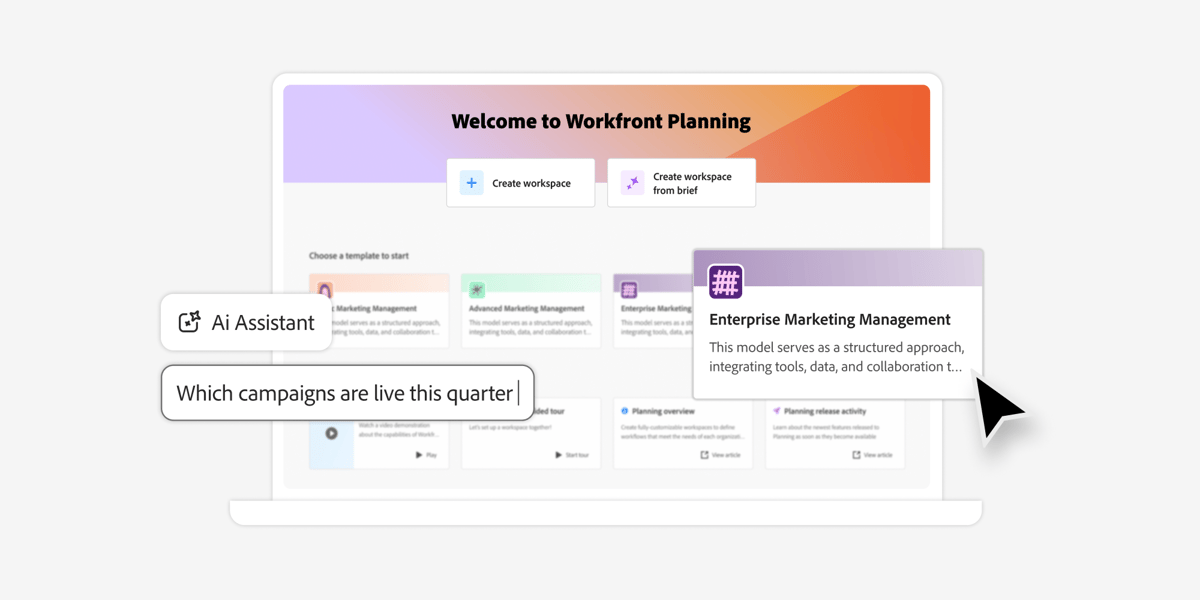
Adobe Workfront is a better fit than Basecamp for larger organizations that need formal approval chains, portfolio reporting, and enterprise work management controls.
Where Adobe Workfront fits
- Enterprise work management: Built for larger organizations with layered teams.
- Formal approvals: Useful when work must move through clear review stages.
- Portfolio visibility: Better fit for reporting across many programs.
- Resourcing depth: Helpful for organizations planning work at scale.
Where Adobe Workfront isn't the right fit: Smaller teams (under 50 creative seats) — the licensing cost and admin overhead don't pay back at smaller scale.
What users say about Adobe Workfront:
"It's nice to have one area and one source of truth for projects and campaigns."
Source: G2
FAQ
- What is the best project management software for large businesses in 2026?
- Adobe Workfront is the enterprise work management standard, especially for marketing and creative ops at scale. Smartsheet wins on portfolio reporting and spreadsheet-led planning. Jira fits engineering programs. ClickUp Enterprise and Wrike Enterprise are the next tier. Microsoft tools fit organizations standardized on M365. Breeze isn't built for enterprise governance, SSO/SAML, or portfolio rollup — if those are your needs, the tools above are honest fits and we'll point you to them.
- What should teams look for in project management software for large businesses?
- Look for a tool that matches how your team plans work, shares updates, and reviews progress. The right tool should be easy to adopt, flexible enough for your workflow, and clear enough that important work does not get lost.
- Which tool works best for organizations that need deep portfolio reporting and formal approval structures?
- Adobe Workfront is a strong fit for organizations that need deep portfolio reporting and formal approval structures. Breeze is better when you want a simpler daily workflow with less setup and less admin overhead.
- Should I choose a simple tool or a more customizable one?
- Choose the simpler option if speed, clarity, and fast team adoption matter most. Choose the more customizable option if your team needs deeper automation, specialized workflows, or more detailed reporting.
Takeaway
Enterprise work management is a different game from team-level PM — it lives or dies on identity (SSO/SAML/SCIM), audit trails, role-based access, performance at scale, and vendor SLAs. Adobe Workfront is the standard for marketing and creative ops at scale. Smartsheet wins on portfolio reporting and spreadsheet-led planning. Jira fits engineering programs. ClickUp Enterprise and Wrike Enterprise round out the next tier; Microsoft tools fit orgs standardized on M365. We don't include Breeze on this list — we're not built for enterprise governance, and if your scale is below 250 users with simpler needs, our small business guide is the more honest fit.
When selecting project management software, prioritize scalability and ease of use. Choose tools that support collaboration and integrate with existing systems. Advanced reporting and resource management features can improve productivity while keeping projects on track. The right tool ensures teams can handle complex workflows without losing focus.